
How to Write a Romance Novel with AI: A Pro's Guide to Prompt Engineering
Introduction
Create a love story involving a baker and a florist. The baker is clumsy, while the florist is sweet. They fall in love over a batch of misdelivered croissants. However, this romance lacks the spark, tension, and unique voice that makes it truly yours. If you’ve been disappointed by AI’s initial draft, you’re in the right place. My name is [Author's Name], and with a background combining software engineering and fiction writing, I know how to achieve extraordinary results from AI through method.
Who This Guide Is For?
This guide caters to creators who believe in AI but are frustrated by its limitations. It’s for developers, marketers, product managers, and authors ready to move beyond guesswork. If you want to exchange simple prompts for a structured workflow that provides precision, control, and consistently high-quality creative content, then this is the guide for you. We’re going to stop asking AI to be the author and start directing it like a professional.
My Transformation from Skeptic to AI Collaborator
I had always been a skeptic. The notion of an algorithm influencing my creative process seemed sacrilegious to me. For years, writing was about the messy, human struggle of finding just the right word. Then, I hit a wall. Working on a historical romance, my two main characters had fantastic chemistry but their central conflict felt contrived. I’d written myself into a corner for weeks. On a whim, I decided to try something different. Instead of asking an AI to write the scene, I gave it a structured prompt. I fed it my character’s core motivations, deepest fears, setting, desired emotional shift, and specific psychological framework—the 'Wounded Healer' archetype. I asked it to brainstorm three potential dialogue snippets where my hero would reveal his deepest vulnerability through seemingly casual comments about family legacy. The results weren’t a finished scene but a series of brilliant suggestions that unlocked the entire emotional puzzle. It was the key I had been missing.
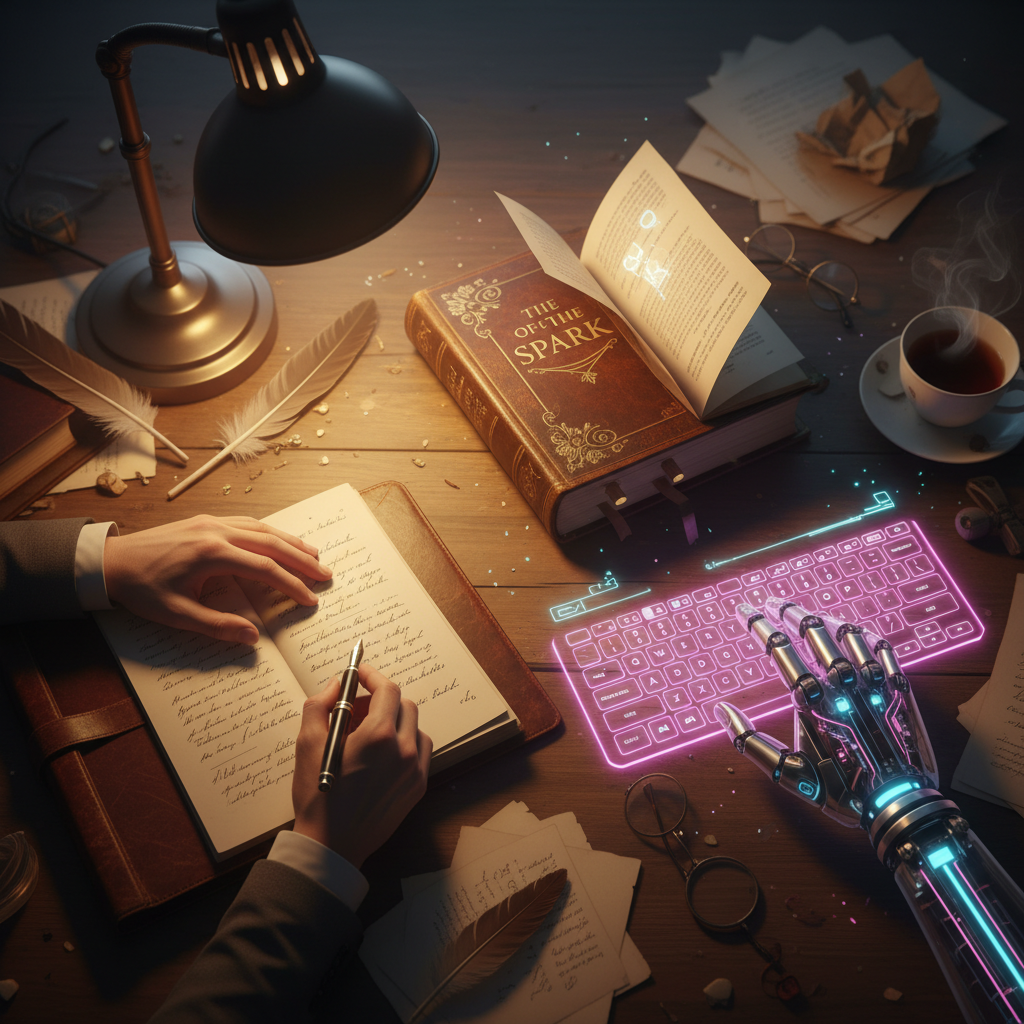
It was then that I no longer viewed AI solely as a substitute but recognized it more as a formidable, unyielding collaborator.
The Core Premise: Transitioning from 'Prompting' to 'Prompt Engineering'
So, can AI produce a good romance novel? The answer is emphatically no… and definitively yes. AI, left on its own, cannot write a great novel because it lacks life experience, genuine emotion, and unique vision. It's merely a skilled mimic, not an innovative creator. But with the guidance of a talented human architect, absolutely.
This is the fundamental distinction between simple 'prompting' and 'prompt engineering.' Prompting is akin to telling a GPS, "Take me to a city." You'll receive a route but it might not be the best one, fastest, or free from traffic. Prompt engineering, on the other hand, is like providing that same GPS with specific waypoints, specifying you want to take the coastal highway, avoid tolls, and stop for the finest coffee along the way. You're not just giving a command; you’re designing a system to achieve precisely what you need. This guide will teach you how to be that architect for your story.
The Main Body: A Professional's Blueprint
Ethical Considerations in AI-Assisted Writing
Before we delve into the technicalities, let’s address the elephant in the room: Is it ethical to use AI for creative writing? This question is valid, and navigating this new territory demands a thoughtful mindset. Think of your AI tool not as a ghostwriter but as a brilliant, tireless intern. It can research, brainstorm, and draft, but you, the author, are the strategist, creative director, and final voice.
Originality isn’t just about who types the words; it’s about the vision, unique combination of ideas, and emotional core of the story. That all comes from you. The AI generates text, but you provide the soul.
When it comes to legalities, particularly concerning copyright, the landscape is still evolving. However, the current stance from the U.S. Copyright Office is clear: works generated entirely by AI without human authorship cannot be copyrighted. As they state on their website, copyright law is designed to protect "the fruits of human intellectual labor". This actually benefits us. It underscores the crucial role of the human author. Your creative choices, your edits, and your final polish are what transform AI-generated text into a copyrightable piece of art. You are not just a prompter; you are the author of record.
The Pros and Cons of Using AI for Creative Writing
Like any powerful tool, AI has its strengths and weaknesses. The key to success is knowing when to use it and when to rely on your own creative instincts. Here’s a quick rundown:
- Pro: Obliterates Writer's Block: Staring at a blank page is a thing of the past. AI can generate dozens of ideas, opening paragraphs, or dialogue snippets in seconds, giving you raw material to work with and refine.
- Con: The Risk of Generic Prose: AI models are trained on vast amounts of text, and their default output can sometimes feel bland or cliché. It’s your job to inject your unique voice and style through careful editing and prompt refinement.
- Pro: Accelerates Your Workflow: From outlining an entire plot to drafting a tricky scene, AI can significantly speed up the writing process, allowing you to focus more on the creative aspects of storytelling.
- Con: The Human Touch is Irreplaceable: AI can't replicate the lived experiences, subtle emotions, and unique perspectives that make a story truly resonate. It can describe a character crying, but you provide the why that makes the reader care.
- Pro: Unlocks New Creative Avenues: AI is an incredible brainstorming partner. It can connect disparate ideas, suggest unexpected plot twists, and help you explore characters and concepts you might not have considered on your own.
Your 5-Step Guide to Writing a Romance Novel with AI
Ready to take your writing from simple prompts to a professional workflow? This five-step blueprint will guide you through the entire process of creating a romance novel, with you at the helm and your AI as a capable co-creator.
-
Step 1: Concept & Trope Engineering with an AI Writing Assistant
Every great romance begins with a killer concept. Instead of vague prompts like "give me a story idea," you'll engineer specific, marketable results using your AI writing assistant. Focus on combining popular tropes in unique ways. For example:
"Act as a romance novel consultant. I want to write a story that combines the 'enemies-to-lovers' trope with a 'fake dating' scenario. Generate 5 unique story hooks set in the competitive world of tech startups. Each hook should include compelling reasons for characters' initial animosity and high-stakes reasons they must pretend to be a couple."
-
Step 2: Advanced AI for Character Development in Romance
Deep, unforgettable characters are the soul of romance. You can employ psychological frameworks to steer the AI in crafting multidimensional characters. Drawing from concepts like Jungian archetypes provides your characters a robust, relatable base. Rather than merely requesting a character description, construct a comprehensive persona with a structured prompt.
Engineered Prompt Example: "Create a detailed character profile for the male protagonist in a romance novel. His core archetype is 'The Rebel' but with the hidden vulnerability of 'The Orphan.'
- Backstory: Provide him with a reason for his rebellious nature, linked to a significant loss from his past.
- Motivations: What does he desire most (his conscious goal) and what truly needs him (his subconscious need)?
- Flaws: Identify his major character flaw that prevents him from finding love.
- Quirks: Detail 3 unique mannerisms or habits.
- Appearance: Describe him in a way that reflects his rebellious nature but hints at his inner turmoil."
Potential AI Output: "Name: Kaelen (Kael) Vance Archetype: The Rebel / The Orphan
Backstory:
Kael was raised in foster care after his parents, both dedicated activists, perished in a protest gone wrong. He views authority as corrupt and rebels against any form of structure, from corporate ladders to romantic commitments. His rebellion serves as a shield to protect him from the pain of attachment...
Motivation:
He consciously aims to establish a self-sustaining artists' commune free from societal rules. Subconsciously, he seeks to build a family and find a place where he truly belongs...
Flaw:
His fierce independence often manifests as pushing people away the moment they get too close...
This is where the magic happens together. You'll collaborate with the AI in a feedback loop. Provide the context, characters' emotions, and the scene's goal. Then use the AI's output as a first draft to rewrite and refine it. A tool like Prompt Pilot Chat can be excellent for this iterative process.
Write a 500-word scene where Kael and Elara, a driven CEO named Kael and the female lead, are forced to share a small hotel room at a conference. The tone should be tense but with moments of unexpected vulnerability. Focus on showing their conflicting personalities through dialogue and internal thoughts. End the scene with an unspoken attraction that surprises both of them.
Your role as the author is most critical in the final stages. While AI can catch typos and errors, the real work of editing is about nuance. Use the AI to check for pacing issues or repetitive sentence structures but make the final decisions on voice, tone, and emotional impact. You are the ultimate quality control.
Choosing Your Tools: A Comparison of the Best AI for Writing Romance Novels
Not all AI tools are created equal. Some are general-purpose powerhouses, while others are specifically designed for fiction writers. Here’s a look at some of the top contenders for your romance novel project.
| Feature | ChatGPT-4 | Sudowrite | Other Novel Software (e.g., Jasper) |
|---|---|---|---|
| Character Generation | Highly flexible with engineered prompts. Can create deep, nuanced profiles based on your input. | Excellent. Offers guided tools like a 'Character Brainstormer' to generate traits, flaws, and backstories. | Good, but often more focused on marketing copy. Can generate character ideas but lacks specialized fiction tools. |
| Plot Outlining | Strong. Can generate detailed outlines based on any narrative structure you provide (e.g., Three-Act, Save the Cat). | Best-in-class. Features a dedicated 'Story Bible' and 'Outline' tool that helps structure chapters and plot points. | Capable, but requires more specific prompting to stay on track for a long-form narrative. |
| Prose Style | Very adaptable. Can mimic styles but requires clear instruction. Can sometimes default to a generic, 'AI' voice without guidance. | Specifically tuned for creative writing. The 'Describe' and 'Rewrite' features help you find more evocative language. | Strong for clear, concise language. Less suited for the purple prose and emotional depth often found in romance. |
| Pricing | Freemium (GPT-3.5) / Subscription for GPT-4 (approximately $20/mo). | Subscription-based (plans vary, often starting around $10-$25/mo). | Subscription-based, typically at a higher price point ($40+/mo). |
| Ease of Use | Simple, conversational interface. The power lies in the quality of your prompts. | Steeper learning curve, but incredibly powerful once mastered. Designed for writers. | User-friendly interface with many templates, though most are not suitable for fiction writing. |
Conclusion: Your Future as an AI-Empowered Author
Transitioning from basic instructions to a designed process is the secret to unlocking AI's true potential as a creative ally. We've moved beyond asking, "Can AI write a good romance novel?" and answered how you can guide it to do so. By structuring your workflow—from concept and characters to plot and prose—you transform the AI from an unpredictable ghostwriter into a powerful, dependable co-author.
Remember, the goal isn't to replace your creativity but to enhance it. The AI can generate ideas, untangle plot knots, and handle the heavy lifting of a first draft, but your unique voice, emotional intuition, and artistic vision are what will make your story resonate with readers. We encourage you to adopt our 5-step framework and adapt it to your style. Start engineering your prompts, and build your next great love story. For more articles and guides, visit our blog.
Abstract (Article Summary)
This guide tackles the common issue of generic and unsatisfactory results when using artificial intelligence for creative writing. It argues that the current method of simple, direct prompts is ineffective for producing high-quality, novel-length fiction. The proposed solution is a structured, five-step 'prompt engineering' framework designed specifically for professional writers and creators. This methodology covers every aspect of romance novel creation: (1) Concept and Character Engineering, (2) Advanced Character Development, (3) AI-Assisted Plot Generation, (4) Collaborative Scene Drafting, and (5) AI-Aided Editing. The article concludes that by adopting this systematic approach, authors can harness AI not as a replacement for human creativity but as a powerful collaborative tool, allowing them to produce nuanced, high-quality romance novels efficiently and consistently.
Frequently Asked Questions (FAQ)
How do I use ChatGPT to create a story?
Using ChatGPT or similar AI tools effectively is a structured process, not just a single command. We recommend our 5-step prompt engineering framework:
- Concept & Tropes Engineering: Brainstorm core ideas, genres, and compelling romance tropes with the AI.
- Advanced Character Development: Use multi-layered prompts to create deep, psychologically rich characters with clear motivations and arcs.
- AI-Assisted Plot Generation: Provide a narrative framework (like the 'Three-Act Structure') and have the AI help you build a detailed plot, including key turning points and subplots.
- Co-Writing Scenes: Work collaboratively with the AI to draft individual scenes, generate dialogue, and describe settings, using feedback loops to refine the output.
- Final Polish: Employ the AI as an editing assistant to check for grammar, style, and pacing, but always apply your final human judgment.
How can AI help overcome writer's block?
- AI is a great tool for breaking through writer's block by offering new perspectives. Instead of asking it to "write the next scene," try using it as a brainstorming partner. Here are some prompts:
- "I'm stuck on a scene where my protagonist, a shy librarian, has to confront her rival. I feel like the dialogue is falling flat. Can you suggest five different opening lines she could say, ranging from uncharacteristically bold to passively aggressive?"
- "My two main characters have just had their first major fight. I'm not sure what should happen next. Based on their personalities (Character A is stubborn and proud; Character B is anxious and people-pleasing), generate three possible scenarios for the next chapter that would increase the tension between them."
- "I need to describe the setting of a first date in a cozy, rain-swept bookstore. Give me a list of ten unique sensory details (sights, sounds, smells) I could include to make the scene more immersive."
-
For a 'Second Chance Romance' Story: "Create a plot summary for a 'second chance romance.' The main characters broke up ten years ago because one was a homebody who feared change, and the other had a wanderlust spirit. They are unexpectedly reunited at a mutual friend's destination wedding in Tuscany. Outline key scenes, including their awkward first reunion, a shared nostalgic memory that resurfaces, a major misunderstanding based on their past issues, and a final romantic gesture where one character proves they have grown and changed."
-
For a 'Fake Dating' Scenario: "Develop a plot for a romance novel centered on the 'fake dating' trope. Character A needs a date for their ex's wedding to show they've moved on. Character B, a charming but commitment-phobic friend, agrees to help. Please detail three escalating situations where their fake relationship feels surprisingly real, a specific moment where one of them realizes they have genuine feelings, and the central conflict that arises when the lie is eventually exposed."